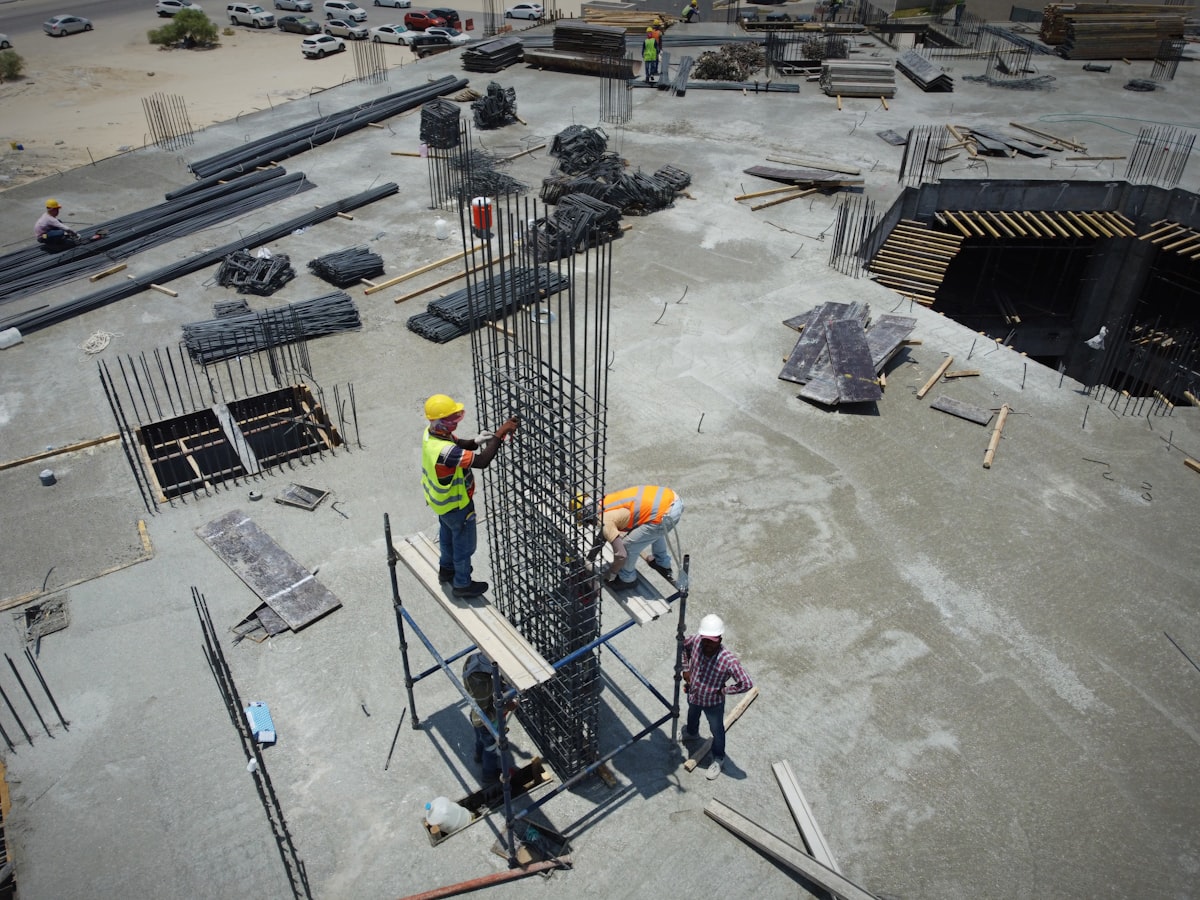
What Is a Concrete Takeoff?
A concrete takeoff is the process of measuring and calculating all the concrete quantities required for a construction project based on the structural and architectural drawings. It tells you exactly how many cubic yards or cubic meters of concrete you need for footings, slabs, columns, walls, beams, and every other concrete element on the job.
For contractors, the concrete takeoff is one of the most critical parts of the estimating process. Concrete is a high-cost material and mistakes in measurement directly hit your bottom line. Under-measure by a few cubic yards and you eat the cost. Over-measure and your bid looks uncompetitive or you end up ordering extra material you do not need.
A proper concrete quantity takeoff for contractors does not stop at volume. It also accounts for reinforcement steel, formwork areas, control joints, concrete strength grades, and waste factors. Each of these items has a cost and needs to be included in your bid.
“Concrete is typically the single largest material cost on any structural project. A takeoff that is off by 5% can mean thousands of dollars in lost profit or a bid that is too high to win the job.”
Why Accurate Concrete Takeoffs Matter
Concrete is not cheap. Depending on your region, a cubic yard of ready-mix concrete can cost between $120 and $180. A medium-sized commercial project might need 500 to 2,000 cubic yards. That means even a small percentage error in your takeoff translates to real money.
Beyond material cost, an accurate concrete takeoff affects:
Ordering the right amount of concrete so you avoid shortages or leftovers
Knowing the surface area of concrete elements to estimate formwork materials
Reinforcement steel is usually estimated as a ratio of concrete volume or taken off separately
Pouring, finishing, and curing labor is estimated based on concrete volume and element type
Pump trucks, ready-mix deliveries, and crew scheduling depend on accurate quantities
Every cubic yard you miss is margin you planned on but will not receive
Step 1: Gather and Review the Structural Drawings
Before you measure anything, you need the right set of drawings. A concrete takeoff draws primarily from the structural engineering drawings, but you will also reference architectural plans for finish slab elevations and section details.
Look for these sheets in your drawing set:
Shows footings, pile caps, grade beams, and slab-on-grade outlines
Column and wall locations, grid lines, and overall dimensions
Rebar sizes, spacing, and bending schedules for each element
Cross-sections showing thicknesses, depths, and offsets
Standard connection details for columns, beams, and slabs
Make sure you have the latest revision of each drawing. Check the title block for the revision date and any addenda that may have been issued. Using outdated drawings is one of the most common sources of takeoff errors.
Step 2: Identify All Concrete Elements on the Plans
Walk through every sheet and mark each concrete element you need to measure. Create a checklist so you do not miss anything. Here are the typical concrete elements found in most building projects:
Isolated footings, combined footings, strip footings, and pile caps. These are usually measured individually as rectangular or trapezoidal volumes.
Horizontal beams at foundation level that connect footings or pile caps. Measured as linear elements with a cross-sectional area.
Ground floor slabs poured directly on earth or fill. Measure area first, then multiply by thickness for volume.
Upper floor slabs, including flat slabs, two-way slabs, and ribbed or waffle slabs. More complex because of drop panels and varying thicknesses.
Vertical structural members carrying loads from slabs and beams. Measure height times cross-sectional area, accounting for different floor-to-floor heights.
Concrete walls including retaining walls, shear walls, and core walls. Measure length times height times thickness.
Structural beams supporting slabs. Measure the beam length and multiply by the cross-sectional area, being careful not to double-count intersection volumes.
Concrete stair flights and intermediate landings. These are usually measured per flight using standard formulas.
💡 Pro Tip
Use different highlighter colors for different element types on your drawings. For example, yellow for footings, pink for columns, green for slabs, and blue for walls. This makes it easy to see at a glance what you have and have not measured.
Step 3: Measure Linear Elements (Footings, Beams, Walls)
Linear concrete elements are measured by their running length and cross-sectional dimensions. This category includes footings, grade beams, tie beams, and wall foundations.
For a strip footing, for example, you measure the total linear length along the centerline from the foundation plan. Then you find the width and depth of the footing from the typical section detail. The volume is:
The same formula applies to grade beams and tie beams. For walls, measure the centerline length and multiply by the wall thickness and height. Be careful with corners and intersections. A good practice is to measure each wall segment separately rather than trying to calculate a single length around the perimeter, because intersection volumes can be double-counted.
Step 4: Calculate Area (Slabs, Walls, Formwork)
While concrete is ultimately measured in volume, you will often calculate area first and then multiply by thickness. This is especially true for slabs and large wall panels.
For slabs on grade and suspended slabs:
When measuring slab area, subtract any major openings like stairwells, elevator shafts, and skylights that are larger than about two square meters. Small openings for pipes and conduits are usually ignored and included in the waste factor.
The area measurement is also needed for formwork estimation. Formwork is typically priced per square foot or square meter of contact area. For a slab, the formwork area is the underside area of the slab plus the edge forms. For walls, it is both faces. Getting the area right in your takeoff means your formwork estimate will also be accurate.
Step 5: Calculate Concrete Volume
This is the heart of the concrete takeoff. You need to calculate the total cubic volume of every concrete element and sum them up. Here is how each common element is calculated:
Rectangular Footing
L x W x D (per footing)
2 ft x 2 ft x 1.5 ft = 6 ft³ = 0.22 yd³ per footing
Column
Width x Depth x Height
18 in x 18 in x 12 ft = 27 ft³ = 1.0 yd³ per column
Slab
Length x Width x Thickness
40 ft x 30 ft x 6 in = 600 ft³ = 22.2 yd³
Wall
Length x Height x Thickness
50 ft x 10 ft x 12 in = 500 ft³ = 18.5 yd³
Most estimators work in cubic feet and then convert to cubic yards at the end (divide by 27). In metric, you work in cubic meters directly.
One important detail: always check the drawing notes for concrete strength specifications. A project might use different concrete strengths for different elements. For example, footings might be 3,000 psi concrete while columns and slabs are 4,000 psi. You need to separate your quantities by strength grade because they have different unit costs.
Step 6: Account for Waste and Reinforcement
No concrete takeoff is complete without waste factors and reinforcement. Standard practice is to add a waste factor of 3% to 5% on top of your calculated volume to account for spillage, over-excavation, and unavoidable over-ordering.
Some estimators use different waste factors for different elements. Slabs on grade might get 5% because of the larger surface area exposed to waste, while columns and walls might get 3% because they are more contained in formwork.
Rebar and Reinforcement
Reinforcement steel is usually taken off separately by measuring each bar size, length, and quantity from the reinforcement details. However, for quick budgeting, many contractors use a rule of thumb: approximately 80 to 120 kg of rebar per cubic meter of concrete for typical reinforced concrete structures. This ratio varies widely by element type, so a detailed rebar takeoff is always more accurate.
Do not forget other concrete-related items like:
- Concrete accessories (anchor bolts, dowels, waterstops)
- Control and expansion joint materials
- Curing compound or wet curing requirements
- Concrete testing (cylinder samples and slump tests)
Step 7: Compile Your Quantity Report
Once all measurements are complete, organize them into a clear quantity report. A well-structured concrete takeoff report typically includes:
A clean, organized report makes it easy for your team to review the quantities, spot errors, and build confidence in the bid. It also helps if the project owner or general contractor asks to see your backup calculations.
Common Concrete Takeoff Mistakes
Even experienced estimators make mistakes. Here are the most common ones to watch out for:
Fix: Where beams meet columns or walls intersect, the volume is shared. Measure each element to the centerline or use a systematic approach to avoid counting intersection volumes twice.
Fix: Mix up inches and feet or millimeters and meters and your quantities will be off by a factor of 12 or 1,000. Always double-check your unit conversions.
Fix: Raw calculated volume is never what you order. Add 3% to 5% for waste. Check local practices as some regions expect higher factors.
Fix: Go through every sheet systematically. Common misses include stair landings, small equipment pads, curb and gutter sections, and lintels over openings.
Fix: General notes on structural drawings often specify additional concrete items like kickers, blinding concrete, or topping slabs that are not shown on the plans.
Fix: Always confirm you have the latest drawing revision. A dimension change between revisions can make your entire takeoff inaccurate.
Manual vs. Digital Concrete Takeoff
Most contractors still perform concrete takeoffs manually. You print the drawings, grab a scale ruler, a calculator, and a highlighter, and start measuring. For a small residential project with a few footings and a slab, this works fine. For a commercial project with dozens of columns, multiple slab elevations, and complex wall geometries, manual takeoff can take 10 to 20 hours and is prone to human error.
Digital takeoff software can speed up the process significantly. Tools like Bluebeam, PlanSwift, and On-Screen Takeoff let you measure directly on PDF drawings with calibrated scales. The software automatically calculates areas and volumes and exports quantities to a spreadsheet.
But even with software, the takeoff still takes time. That is where professional takeoff services come in. When you outsource your concrete takeoff to Takeoff Hub, you send us your drawings and we send back a complete quantity report within 24 to 48 hours. Our team checks every measurement and organizes everything by element type, concrete grade, and pour phase. You skip the measuring and go straight to pricing.
Recommended Tools
These are tools we recommend for contractors and estimators. If you purchase through these links, we may earn a small commission at no extra cost to you.
Need a Concrete Takeoff for Your Next Bid?
Upload your structural drawings and get back precise concrete quantities, rebar estimates, and formwork areas within 48 hours. No software needed, no monthly subscription.
Start Your First TakeoffContinue Reading